
2026-11-05
Ten Reels in October: How a 1976 Climbers’ Gathering in Banff Became the Oscars of the Outdoor World
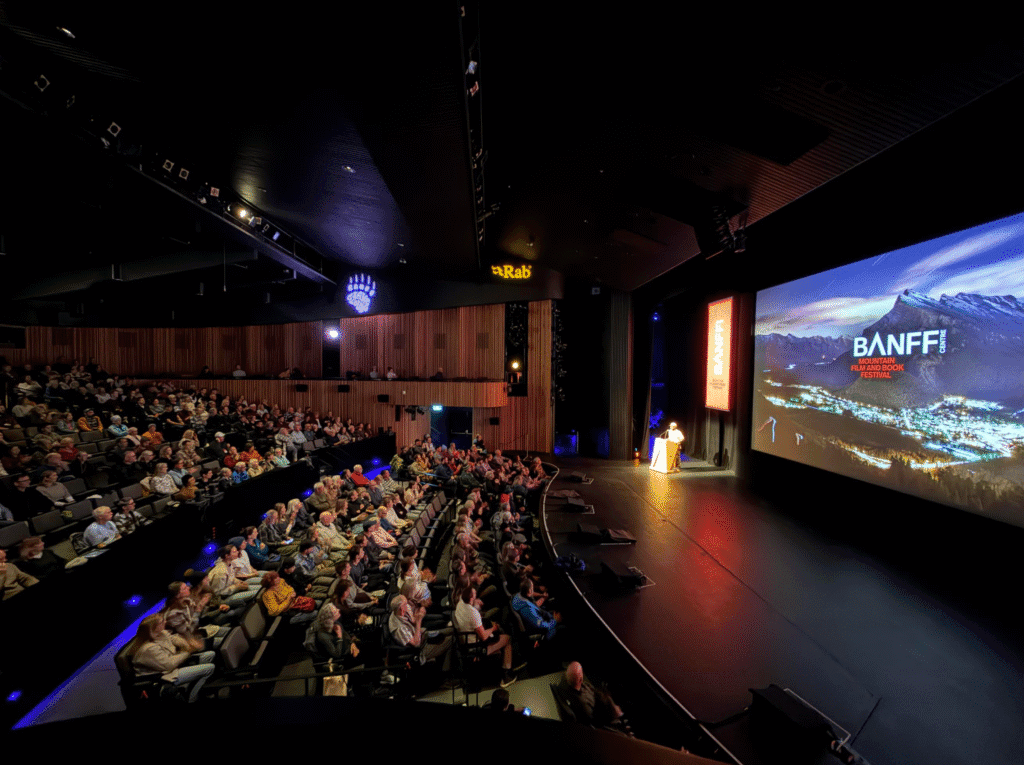
On the morning of Sunday, October 31, 1976, the air in the Bow Valley of Alberta, Canada, carried the unmistakable bite of an approaching Rockies winter. Down in the town of Banff, the rock season was officially dead, the ice season had barely formed, and local climbers were entering that restless autumn limbo where gear is sharpened in basements and stories grow taller in dimly lit bars.
Up on the side of Tunnel Mountain, inside the Margaret Greenham Theatre at The Banff Centre, four local mountaineers and educators (Chic Scott, John Amatt, Chrisondi, and Evelyn Moorhouse) were threading 16-millimeter film onto projectors. They had organized a modest, one-day experiment they called the Banff Festival of Mountaineering Films.
Their goal was simple: gather the local climbing tribe under one roof before winter set in, screen ten hard-to-find expedition films, and hope a hundred people showed up to cover the cost of the room.
They had no idea they were birthing the single most influential cultural institution in modern adventure cinema.
One Room, 450 Dirtbags, and Twelve Hours of Celluloid
By 10:00 AM that Halloween morning, the organizers knew their math was wrong. Cars with ski racks and rusted fenders lined the road up Tunnel Mountain. Climbers had driven in from Calgary, Canmore, Jasper, and across the border from Montana and Washington.
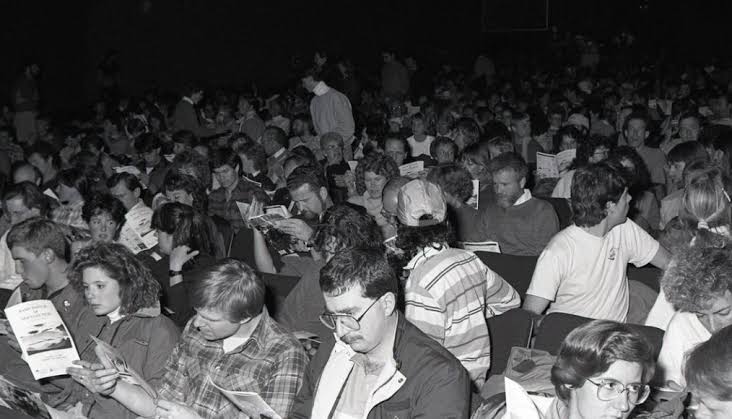
When the doors opened, 450 people squeezed into the auditorium, packing every seat, sitting in the aisles, and leaning against the back walls in wool sweaters and patched down jackets. For the next twelve hours, until 10:00 PM, the room sat transfixed in the glow of the projector beam.
Until that day in 1976, North American alpinists rarely saw moving images of what was happening on the great ranges of the world. Television networks cared little for mountaineering unless someone died, and the only established mountain film festival on Earth was thousands of miles away in Trento, Italy, founded in 1952. If you wanted to know how Chris Bonington’s British expedition had tackled the brutal Southwest Face of Mount Everest the year before, you read about it months later in black-and-white print journals.
At Banff that Sunday, the mountains moved. The crowd watched Bonington’s Everest footage, marveled at early Canadian Rockies ice climbing, and saw the raw mechanics of high-altitude survival unfold with the clatter of 16mm reels. When the lights came up at 10:00 PM, nobody went home. The entire theater spilled into the bar, arguing furiously over aid climbing versus free climbing, siege tactics versus alpine style, and what was truly possible on rock and ice.
Where Legends Came to Argue
What made Banff indispensable over the next decade wasn’t red carpets or industry executives; it was friction and proximity.
As the one-day gathering expanded into a weekend, and eventually a nine-day festival incorporating mountain literature, Banff became the annual town hall of global mountaineering. It was one of the few places on Earth where an eighteen-year-old Canadian ice climber sleeping in the back of a station wagon could stand in line for coffee behind Reinhold Messner, Sir Edmund Hillary, Royal Robbins, or Yvon Chouinard.
On stage, the festival became a crucible for the ethics of adventure. When Messner spoke at Banff after his solo, oxygenless ascents in the Himalaya, he wasn't presenting to passive moviegoers. He was defending a philosophy of pure, stripped-down exposure in front of peers who understood the exact weight of a wet rope at 7,000 meters.
"Unlike Hollywood festivals, where audiences applaud spectacle regardless of how it was fabricated, the Banff audience became notoriously impossible to fool. Truth became the festival's currency."
If a filmmaker added fake sound effects of cracking ice, exaggerated the grade of a pitch, or staged a rescue for the camera, four hundred climbers in the dark would laugh them out of the room. Truth became the festival's currency.
1986: The Road Cases That Changed Outdoor Culture
For its first ten years, Banff had a geographical ceiling: if you wanted to experience the films, you had to travel to Alberta in November.
Then, in 1986, the festival made the pivotal decision that transformed adventure filmmaking from a niche subculture into a global movement. They packed a selection of the year’s winning films into heavy shipping cases and launched the Banff Mountain Film Festival World Tour.
At first, the tour visited a handful of Canadian cities. Within a decade, it had crossed oceans. Today, immediately after the festival wraps in Alberta each November, traveling projectionists and tour hosts carry those winning programs to more than 40 countries, filling historic theaters, university halls, and civic auditoriums across more than 1,000 screenings in front of over 550,000 people every year.

The ripple effect on outdoor culture was immense:
- It built an economic ecosystem for adventure filmmakers: Before the World Tour, shooting a documentary on a remote Arctic big wall or a desert ultra-marathon was a financial black hole. Banff gave independent directors, from Leo Dickinson and Rick Ridgeway to the modern generation of Jimmy Chin, Elizabeth Chai Vasarhelyi, Peter Mortimer, and Josh Lowell, a global theatrical circuit.
- It paved the road to the Academy Awards: Films like Touching the Void, Meru, The Dawn Wall, The Alpinist, and Free Solo didn't emerge from a vacuum. They grew out of the visual language, rigging innovations, and storytelling rigor honed for decades inside the Banff community.
- It evolved the definition of a "mountain story": Over five decades, the festival shifted the lens away from pure conquest, planting flags on summits, toward deeper human truths. Today’s standout mountain films examine obsession, grief, environmental stewardship, Indigenous reclamation of ancestral peaks, and endurance athletes pushing into uncharted psychological territory.
Why Authentic Mountain Cinema Matters More Now Than Ever
As Banff enters its fiftieth-anniversary era, its role as a cultural anchor is arguably more urgent today than it was in 1976.
We live in an era of three-second vertical clips, algorithmic outrage, and synthetic imagery where anyone can fake an expedition from a desk. Against that noise, a real outdoor documentary demands patience and vulnerability. You cannot fake the hollow look in a thru-hiker’s eyes after 2,500 miles on the Continental Divide Trail, the sound of wind tearing at a tent on a 4,000-meter ridge, or the quiet courage required to step off the ground when nobody is watching.
And yet, for anyone who loves this genre, one frustration has always remained: what happens when the festival leaves town?
Every year, hundreds of extraordinary adventure documentaries are poured into the festival circuit. A few lucky winners tour the world for a single night in each city, and then, all too often, vanish into scattered links, expired passwords, or forgotten hard drives. Viewers who leave a screening buzzing with inspiration have had no dedicated place to return to when they want that same depth of storytelling on a Tuesday night in March.
That gap is the exact reason we built elevi.film.
Fifty years ago, four climbers in Banff proved that when you put real stories of human endurance on a screen, people will drive through a snowstorm just to sit in the dark and watch. Today, the projectors look different, and the theater fits in your pocket or living room, but the hunger for unvarnished human grit hasn't changed an inch.
Enjoyed this story?
Give this article a like or leave a comment below.
Comments & Discussion (0)
No comments yet. Be the first to start the discussion!
Read Next
2026-10-28
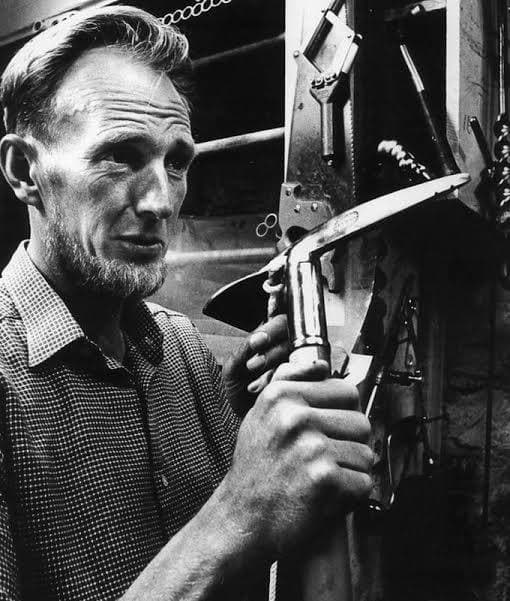
Wrecked Warplanes and Bamboo Shafts: How Two Rebels Invented Modern Ice Climbing
For over a century, vertical frozen waterfalls were considered unclimbable. Discover how a Scottish inventor salvaging WWII airplane parts and a Californian blacksmith living out of his car changed alpinism forever.

2026-10-27
From Wooden Clogs to Everest: The Extraordinary History of La Sportiva
How did a tiny 1928 workshop carving wooden shoes for Dolomite lumberjacks become the most technical climbing and mountaineering footwear brand on Earth? Discover the four-generation story of La Sportiva.